- gadiasince1974@gmail.com
- +91 94799 25770
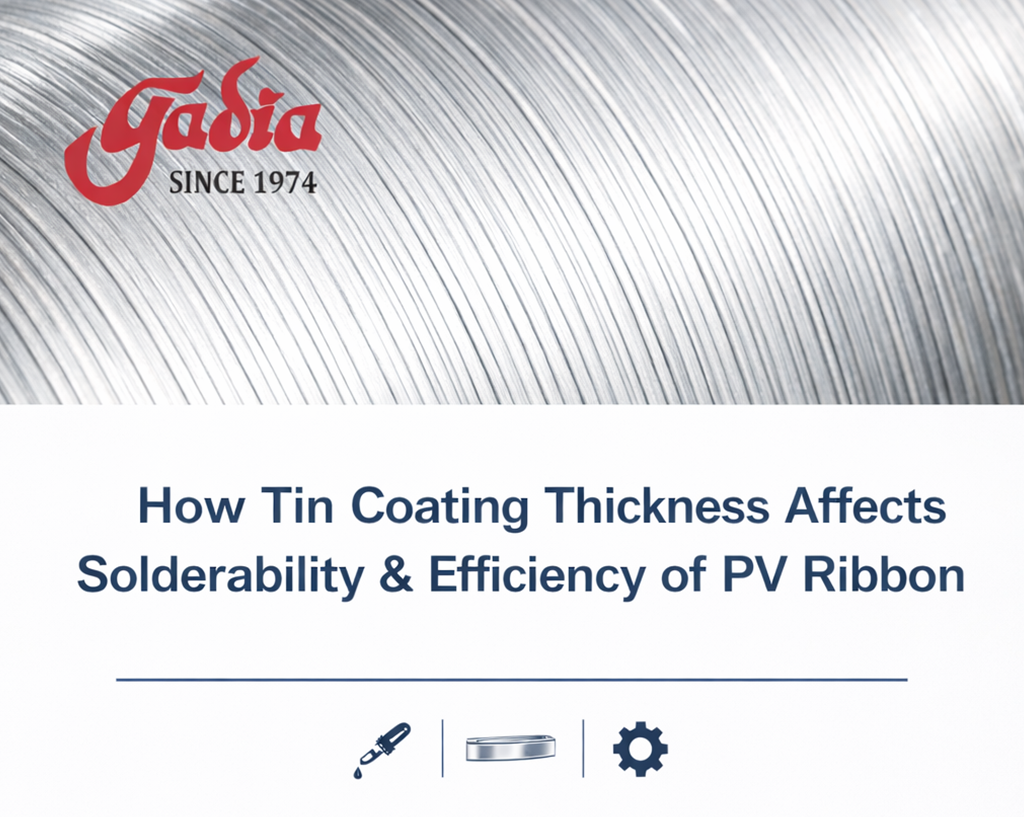
Tin coating on PV ribbon plays a crucial role in ensuring strong electrical connections and reliable solar module performance. Its thickness must be carefully controlled to balance solderability, conductivity, and durability.
Key Impacts
🔧 Solderability
- Too thin: Poor wetting, weak joints, oxidation risk
- Optimal thickness: Smooth solder flow, strong bonding, high peel strength
- Too thick: Risk of brittle joints and excess solder buildup
⚡ Electrical Efficiency
- Thin or uneven coating increases contact resistance
- Excess tin (lower conductivity than copper) can slightly increase energy losses
- Proper coating ensures efficient current flow and minimal losses
🌡️ Reliability \& Protection
- Optimal thickness improves resistance to thermal cycling and mechanical stress
- Acts as a barrier against corrosion and environmental damage
Conclusion
Maintaining the right tin coating thickness is essential for achieving good solderability, low electrical losses, and long-term module reliability. Consistent and uniform coating ultimately leads to higher efficiency and better performance of solar modules.
Get a Quotation
We're here to answer your questions and help